


Think Before you thumb
What is Digital Citizenship?
Digital citizenship can be defined as
the norms of behavior with regard
to technology use. (Ribble, 2012)
Etiquette: Be respectful online. Treat others how you want to be treated when texting, commenting, or gaming.
Communication: Share information clearly and responsibly—whether you’re chatting, posting, or emailing.
Education: Learn how to use technology safely, and help others learn too.
Access: Everyone should be able to use technology and be included—no one should be left out.
Commerce: Be smart when shopping online—only buy from trusted sites and never share your info carelessly.
Responsibility: Think before you post. Your actions online have real consequences.
Rights: You have the right to express yourself online—but so does everyone else. Respect their opinions.
Safety: Protect yourself. Don’t share personal info with strangers or on public sites.
Security: Use strong passwords, don’t click suspicious links, and protect your devices from viruses. Ribble, M. (2012). Digital Citizenship for Educational Change. Kappa Delta Pi Record, 48(4), 148–151. https://doi.org/10.1080/00228958.2012.734015


Why is digital citizenship important?
Digital citizenship is important not only for adults but especially for middle school students. Middle school students are exploring themselves and trying to find their identity. In particular they need to have a positive digital identity online. Teachers need to prepare students at this age for their online journey since students are more independent online.
“Teaching digital citizenship as a “planned part of the curriculum” underscores the message that using technology is a privilege and not a right. Students need to see that being a good citizen is just as important in the digital world
as in their community.” (J.Bailey, M.Ripple,2006) Being a digital citizen requires you to know what is acceptable, how to deal with problems and how to protect themselves. In this site we will explore different resources
J.Bailey , M.Ripple (2006) Learning and Leading with Technology

Netiquette
Teachers explore the importance of Digital Citizenship.
Digital Citizenship emphasizes the responsibility and ethics of using technology, guiding students to engage thoughtfully and respectfully in the digital world.


★★★★★
4.8 rating from 1,400+ customers
DIGITAL CITIZENSHIP
Empower Responsible Technology Use
Overview of Digital Citizenship
Consider information before posting or sharing
Privacy of Information
Identify /report cyber-bullying
Balance Screen Time
Know impact of digital imprint
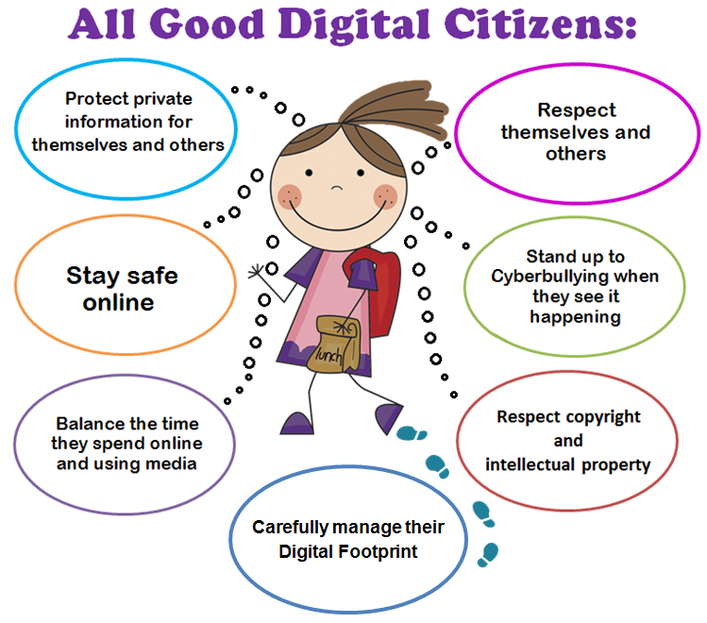
Picture Source: Virtual Library
Join the Digital Movement
Empower Yourself with Knowledge on Digital Citizenship and Responsible Technology Use
Digital Spot © 2025 by Rachel Wilson is licensed under CC BY-NC-SA 4.0


